
Sun Damage/Uneven Pigmentation
Sun damage and uneven pigmentation, often called photoaging or solar lentigines, result from cumulative UV exposure over years. It leads to dark spots, freckles, redness, and a mottled complexion that makes skin look older. While common on the face, hands, chest, and arms, it is highly treatable with modern dermatologic options. Early intervention prevents further damage and improves skin appearance significantly.
Age Spots / Liver Spots
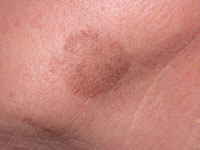
Credit DermNet
Age spots can be troubling because they are often mistaken by patients for cancer due to their flat tan, black or brown coloring.
Age spots (which are also frequently referred to as liver spots or solar lentigines) are thought to be caused when an excess of melanin (skin pigment) is created, and their appearance can be exacerbated by exposure to sun, ultraviolet light, and the aging process. For that reason, age spots are commonly found in older adults and on areas of the body that see the most sun, such as the face, arms, shoulders and hands. Those under the age of 50 who spend an excessive amount of time in the sun may also see age spots appear or have their appearance worsen.
Despite their potentially threatening appearance, age spots are harmless. Many patients opt to have them lightened or removed for cosmetic reasons.
However, since it can be difficult for patients to discern the difference between age spots or a potentially malignant growth, we recommend consulting a professional to help alleviate concerns. Please call us at 803.329.6030 or request an appointment online.
Brown Spots

Brown spots generally appear on exposed skin areas like the face, back, neck, chest, shoulders and hands. Some of the main causes of brown spots are sun exposure, aging, and genetics.
When skin is exposed to the sun, it causes an increase in the production of cells known as melanocytes that increase melanin in the skin, thus turning the skin darker. These dark skin patches are known as brown spots, age spots, dark spots, sun spots and liver spots.
The spots are usually harmless, but many consider them unattractive. To lighten brown spots, we offer multiple treatments including laser treatments, chemical peels, and skin care products.
Red Spots
 Red spots can be caused by broken capillaries, cherry angiomas or telangiectasias. They are most commonly found on the face, nose, chin, and cheek but can also be found on the other parts of the body such as the legs, chest, back, arms, legs, and lower extremities. While they are usually medically insignificant, they may be cosmetically bothersome.
Red spots are most commonly caused by genetics, long-term sun and wind exposure, some medications, pregnancy, and excessive alcohol use. They are very common and can be removed with a special type of laser that has become the gold standard to safely treat vascular lesions while minimizing damage to surrounding tissue. Learn more about our Vascular Laser.
Melasma
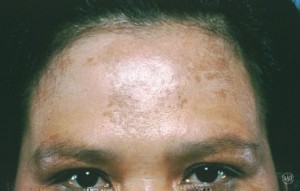
(c)American Academy of Dermatology
Melasma (muh-LAZ-muh) is a common skin problem. It causes brown to gray-brown patches, usually on the face. Most people get it on their cheeks, bridge of their nose, forehead, chin, and above their upper lip. It also can appear on other parts of the body that get lots of sun, such as the forearms and neck.
Large Pores
What good are pores? Although they can be a cause of facial grief, pores actually are essential to your skin’s well being. These small openings allow your body’s natural oil (sebum) to reach and then moisturize your skin. We typically take our pores for granted until they become enlarged – which can happen when they are infected, clogged by oil or dead skins, or as we age, as the elasticity and in surrounding skin wears down over time. There are several treatments available that can make large pores less perceptible.
Please request an appointment online or call us at 803.329.6030 to talk with one of our experts about reducing the prominence of your pores.
Common Symptoms of Sun Damage
- Brown spots (solar lentigines or liver spots)
- Freckles that darken with sun
- Redness, telangiectasia (visible blood vessels)
- Rough, leathery texture
- Uneven skin tone or mottled pigmentation
These changes are more noticeable in fair skin but affect all tones.
Causes and Risk Factors

Chronic UV exposure damages melanocytes and collagen, causing overproduction of pigment in some areas. Risk factors include frequent sun exposure, tanning beds, fair skin, and genetics. Hormones and certain medications can worsen pigmentation.
Effective Treatment Options
- Topical brighteners (hydroquinone, vitamin C, retinoids, azelaic acid)
- Chemical peels for surface renewal
- Laser and IPL therapies for targeted pigment removal
- Microneedling or fractional lasers for texture improvement
Multiple sessions and maintenance yield best results. Combination therapy is often ideal.
Prevention and Daily Care Tips
- Daily broad-spectrum SPF 30+ (reapply every 2 hours)
- Wear protective clothing, hats, and sunglasses
- Avoid peak sun hours (10 AM–4 PM)
- Use antioxidant serums for extra protection
- Consistent year-round sun protection is essential
When to See a Dermatologist
Consult a specialist for persistent dark spots, changing lesions, or desire for professional rejuvenation. A dermatologist can customize treatment and screen for skin cancer.
Frequently Asked Questions
- Can sun damage be reversed? Significant improvement is possible with treatment.
- Is uneven pigmentation dangerous? Usually cosmetic, but new/changing spots should be evaluated.
- Best treatment for age spots? Lasers or chemical peels for faster, noticeable results.
- How long until results? Weeks to months depending on modality.
- Does sunscreen prevent melasma-like pigmentation? Yes—daily use is the best prevention.
Sun damage and uneven pigmentation are common but highly treatable. With consistent prevention and professional care, you can achieve smoother, more even-toned skin. Request an appointment at Palmetto Skin and Laser Center for personalized sun damage treatment. Call (803) 329-6030 or book online—expert solutions for radiant, healthy skin are available.