
Rosacea: Symptoms, Triggers, Treatment & Management
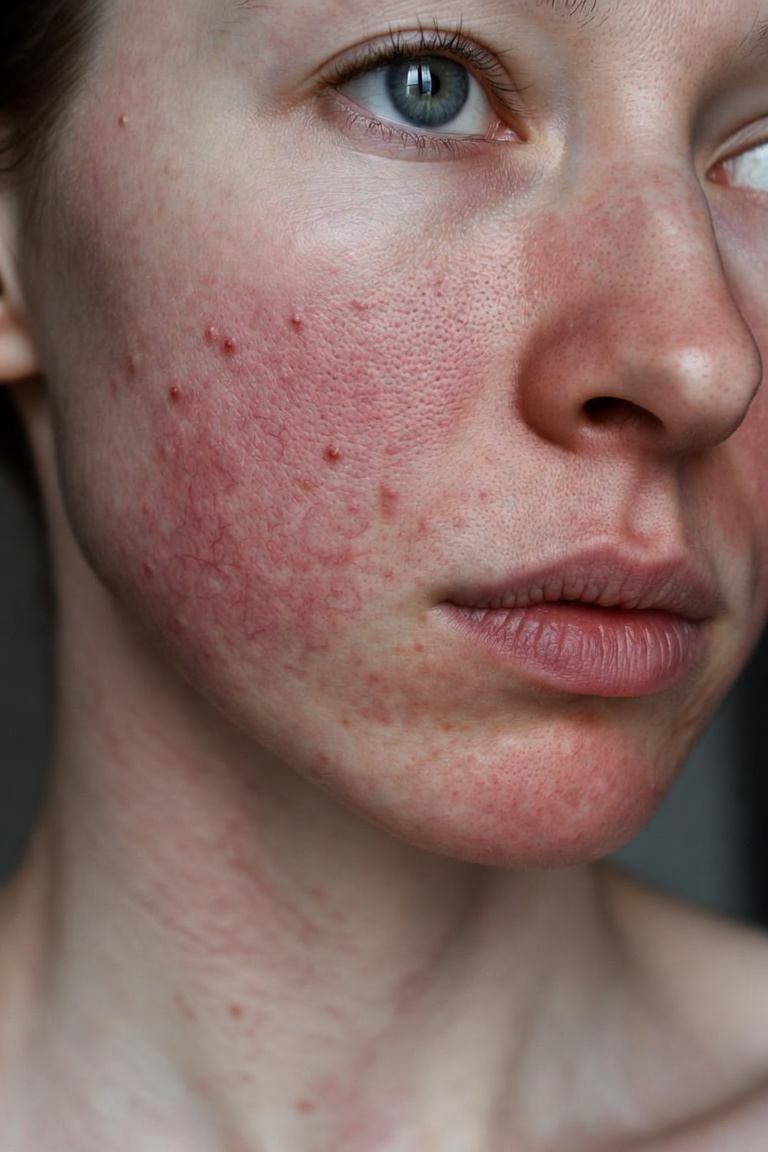
Rosacea is a chronic inflammatory skin condition that affects more than 16 million Americans. It primarily causes persistent facial redness, visible blood vessels, bumps, and sometimes eye irritation. While there is no cure, rosacea is highly manageable with the right combination of lifestyle changes, skincare, and medical treatments. Many patients enjoy long periods of remission and improved quality of life.
Common Symptoms of Rosacea
Rosacea symptoms vary but often include:
- Persistent redness or flushing on the central face (cheeks, nose, forehead)
- Visible small blood vessels (telangiectasia)
- Red bumps or pus-filled pimples (papulopustular rosacea)
- Eye irritation, dryness, or swelling (ocular rosacea)
- Thickened skin on the nose (phymatous rosacea, more common in men)
Symptoms can come and go and are often mistaken for acne or sensitive skin reactions.
Main Triggers to Avoid
Common flare-up triggers include:
- Sun exposure, heat, or cold wind
- Spicy foods, hot drinks, and alcohol (especially red wine)
- Stress and emotional upset
- Certain skincare products, heavy moisturizers, or steroids
- Exercise or hot environments
Identifying your personal triggers through a symptom diary is one of the most effective management strategies.
Effective Treatment Options
Treatment is individualized and may include:
- Topical medications (metronidazole, azelaic acid, ivermectin)
- Oral antibiotics for inflammatory bumps
- Laser or light therapy for visible blood vessels and redness
- Gentle daily skincare routine with non-irritating, fragrance-free products
- Eye drops or oral medications for ocular rosacea
Many patients see significant improvement within weeks. Consistent use and trigger avoidance are key to long-term control.
Daily Management and Prevention Tips
- Use broad-spectrum mineral sunscreen daily
- Choose gentle cleansers and moisturizers designed for sensitive or rosacea-prone skin
- Avoid harsh scrubs, alcohol-based products, and overheating
- Manage stress through relaxation techniques
- Track flares to identify patterns
When to See a Dermatologist
Seek professional care if redness persists, bumps worsen, or eye symptoms appear. Early treatment prevents progression and improves cosmetic results.
When to See a Dermatologist
Your Content Goes Here
Frequently Asked Questions
- Is rosacea curable? No, but it can be effectively controlled.
- Can diet help rosacea? Avoiding personal triggers like spicy foods and alcohol often reduces flares.
- Is rosacea the same as acne? No—treatments differ, and rosacea usually starts later in life.
- Does rosacea go away? It can enter remission but may return without ongoing management.
- Best skincare for rosacea? Minimalist routines with soothing, non-comedogenic products.
Rosacea is a manageable condition that responds well to consistent care. By understanding your triggers and working with a dermatologist, you can achieve clearer, more comfortable skin. Request an appointment at Palmetto Skin and Laser Center today—expert guidance and advanced treatment options are available to help you feel confident in your skin. Call (803) 329-6030 or book online.