
Squamous Cell Carcinoma (SCC): Symptoms, Causes, Treatment & Prevention
SCC is the second most common skin cancer, arising from squamous cells. It can grow and spread if untreated but is highly curable when caught early.
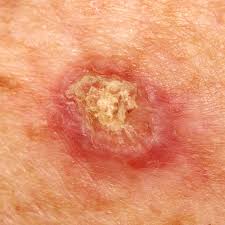
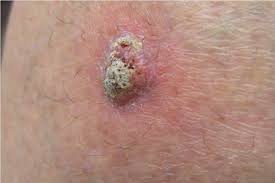
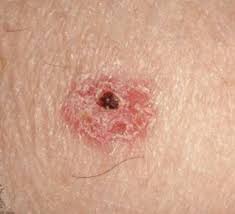
Symptoms of Squamous Cell Carcinoma (SCC)
- Firm red nodule
- Scaly, crusty patch
- Non-healing sore or ulcer
- Raised growth with central depression
Common on face, ears, neck, hands, and arms.
Causes of Squamous Cell Carcinoma (SCC)
Primarily cumulative UV exposure; also scars, chronic wounds, immunosuppression.
Diagnosis and Treatment of Squamous Cell Carcinoma (SCC)
Biopsy diagnosis. Treatments: excision, Mohs surgery (high cure rate), radiation, or topical therapy for superficial cases.
Prevention of Squamous Cell Carcinoma (SCC)
Daily SPF, protective clothing, no tanning, regular screenings—especially if history of AK.
Frequently Asked Questions about Squamous Cell Carcinoma
What does squamous cell carcinoma look like on the skin? Squamous cell carcinoma often appears as a firm, red nodule, a flat scaly patch with crusting, or a raised growth with a central depression. It may look like a wart, an open sore that doesn’t heal, or a thickened, rough area. On the lips or ears, it can present as a scaly, ulcerated spot. Unlike basal cell carcinoma, SCC tends to grow faster and has a rougher texture. Any non-healing spot lasting more than 4 weeks should be evaluated promptly.
How serious is squamous cell carcinoma and can it spread? While most SCCs are highly curable when caught early, they are more serious than basal cell carcinoma because they have a greater potential to spread (metastasize) to lymph nodes or distant organs if left untreated. The risk of spread is higher for tumors on the lips, ears, or in immunosuppressed patients. Early treatment with surgery or Mohs usually results in a cure rate over 95%. Regular follow-up is important after diagnosis.
What is the best treatment for squamous cell carcinoma on the face? Mohs micrographic surgery is often the preferred treatment for SCC on the face, ears, or neck because it offers the highest cure rate while preserving as much healthy tissue as possible for the best cosmetic outcome. Other options include standard surgical excision, radiation therapy, or topical chemotherapy creams for very superficial cases. A Palmetto Skin Board-certified dermatologist will recommend the best approach based on the tumor’s size, location, and your overall health.
Does squamous cell carcinoma itch or hurt? Yes — many patients report that SCC lesions can be itchy, tender, or painful, especially when they ulcerate or crust. Some describe a burning sensation or sensitivity when touched. However, not all SCCs cause symptoms, which is why visual changes (new growths or non-healing sores) are more reliable warning signs than discomfort alone.
What is the difference between actinic keratosis and squamous cell carcinoma? Actinic keratosis (AK) is a precancerous lesion caused by sun damage, while squamous cell carcinoma is an actual cancer. AKs are rough, scaly patches that may progress to SCC in 5–10% of cases. Dermatologists treat AKs aggressively to prevent them from turning into SCC. If a lesion becomes thicker, ulcerated, or grows, it may have progressed and requires biopsy to rule out SCC.
Take Action
Squamous Cell Carcinoma is serious but treatable with early detection. Daily SPF, protective clothing, no tanning, regular professional screenings. Partner with experienced Board-certified dermatologist for expert care and peace of mind. Early action saves lives—act now for healthier skin!